How to Optimize Pins for More Visibility and Clicks
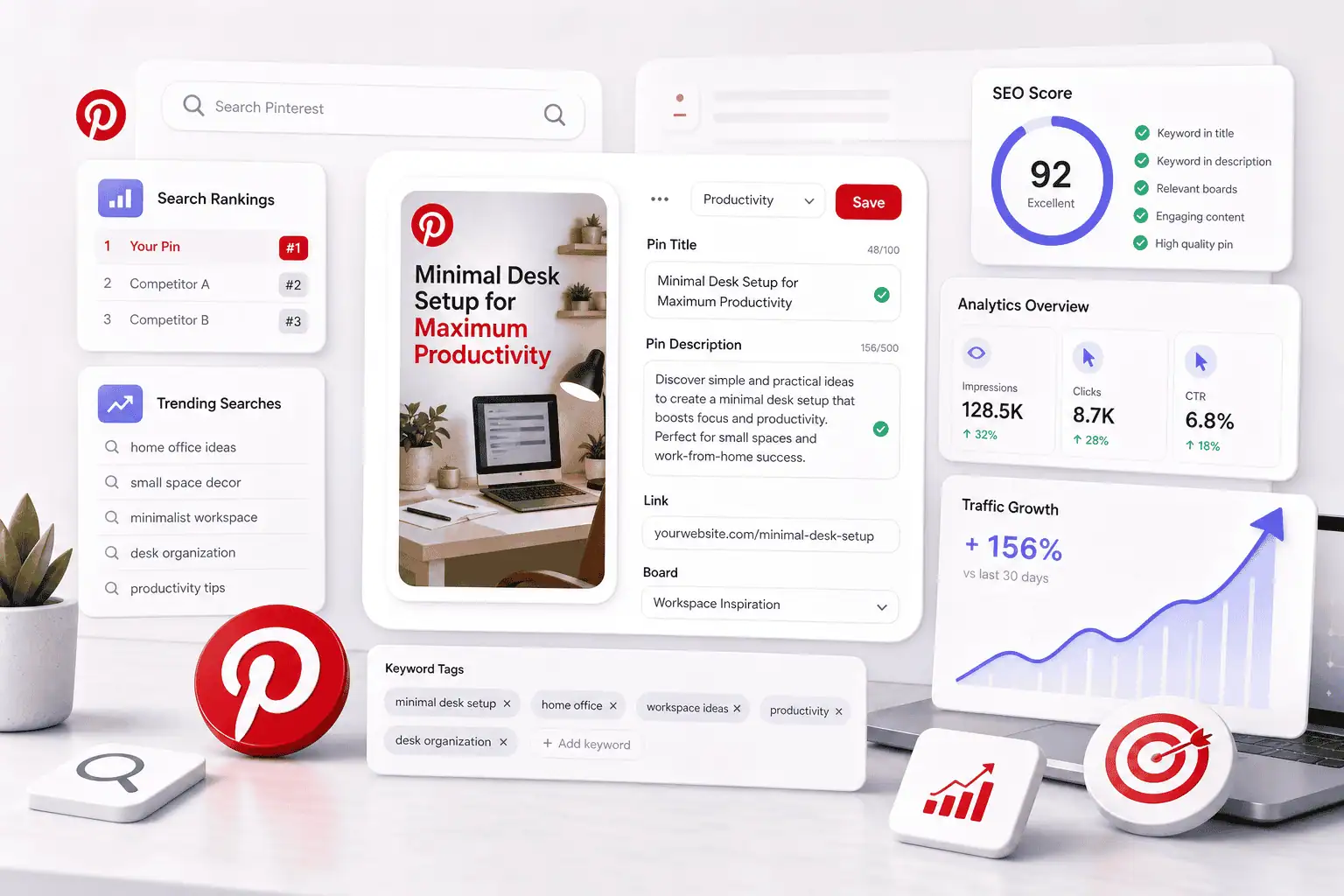
Pinterest is more than a social platform, it's a visual search engine. Every day, millions of users search for ideas, products, tutorials, recipes, and inspiration. If you want your Pins to appear in Pinterest search results, optimizing your Pin titles and descriptions is essential.
While images attract attention, Pinterest relies heavily on text signals to understand what your content is about. Well-optimized titles and descriptions help Pinterest categorize your Pins, rank them for relevant searches, and drive more traffic to your website.
In this guide, you'll learn Pinterest title and description SEO best practices and how to write Pin metadata that improves both discoverability and click-through rates.
Why Pinterest SEO Matters
Pinterest uses keywords to determine when and where your Pins should appear. The platform analyzes several elements, including:
- Pin title
- Pin description
- Board title
- Board description
- Image content
- Destination URL
Among these, the Pin title and description are two of the most important ranking signals you can directly control.
When optimized correctly, they help Pinterest understand your content and show it to users searching for relevant topics.
Pinterest Title SEO Best Practices
1. Clearly Describe the Content
Your title should immediately tell users what they'll find when they click.
A good Pinterest title aligns perfectly with both the Pin image and the destination page.
Good Example:
- 10 Small Backyard Garden Ideas
Poor Example:
- You'll Love These Ideas
Pinterest and users should instantly understand the topic without guessing.
2. Put Important Keywords First
Pinterest often truncates titles, especially on mobile devices.
Place your primary keyword near the beginning of the title so users and Pinterest can quickly identify the topic.
Example:
- Healthy Meal Prep Ideas for Busy Professionals
Instead of:
- For Busy Professionals: Healthy Meal Prep Ideas
3. Use Relevant Keywords Naturally
Keyword research is an important part of Pinterest SEO.
Combine:
- High-volume keywords
- Long-tail keywords
- Search intent phrases
For example, instead of targeting only "home office," consider:
- Small Home Office Ideas
- Home Office Organization Tips
- Home Office Setup for Remote Work
Natural keyword usage performs better than forcing multiple keywords into a title.
4. Keep Titles Short
Pinterest displays only a limited portion of titles.
Aim for concise, descriptive titles that typically stay under 50 characters when possible.
Examples:
- 15 Living Room Storage Ideas
- Beginner Crochet Projects
- Easy High Protein Breakfasts
Shorter titles are easier to read and often generate more engagement.
5. Use Numbers When Appropriate
Pinterest users respond well to actionable content.
Numbers help set expectations and improve click-through rates.
Examples:
- 7 Email Marketing Tips for Beginners
- 12 Kitchen Organization Hacks
- 25 Summer Outfit Ideas
6. Avoid Clickbait
Misleading titles may increase clicks initially but often lead to poor engagement metrics and higher bounce rates.
Avoid titles like:
- This Secret Trick Changes Everything
Unless the content genuinely delivers on that promise.
Accurate titles build trust and improve long-term performance.
7. Avoid Keyword Stuffing
Pinterest can understand context better than ever.
This title looks spammy:
- Home Office Ideas Home Office Design Home Office Decor
A better version:
- Home Office Design Ideas for Small Spaces
Focus on readability first.
Pinterest Description SEO Best Practices
1. Expand on the Title
Your description should add context instead of repeating the title.
If your title is:
10 Small Backyard Garden Ideas
Your description might explain:
- Types of garden layouts
- Space-saving techniques
- Suitable plants
- Budget considerations
This provides Pinterest with additional information and keywords.
2. Write for Humans First
Pinterest descriptions should read naturally.
Avoid creating a list of disconnected keywords.
Poor Example:
- garden ideas, backyard garden, small garden, garden design, garden layout
Better Example:
- Discover creative backyard garden ideas for small spaces, including raised beds, vertical gardening solutions, and low-maintenance plants that help maximize every square foot.
Natural language improves both user experience and SEO.
3. Use Relevant Keywords Strategically
Descriptions provide valuable space to target related keywords that don't fit naturally in the title.
For example:
Title:
- Beginner Budgeting Tips
Description:
- Learn simple budgeting strategies, money-saving techniques, expense tracking methods, and personal finance habits that help beginners manage their finances with confidence.
This broadens your keyword coverage without repetition.
4. Be Specific
Generic descriptions rarely perform well.
Tell users exactly what they'll learn or gain.
Weak Description:
- Helpful tips for your business.
Strong Description:
- Learn how to generate more leads using email marketing automation, customer segmentation, and personalized campaigns that improve conversion rates.
Specificity improves relevance and click-through rates.
5. Use Available Character Space Wisely
Pinterest allows descriptions of up to 500 characters.
You don't need to use all 500, but avoid writing only one short sentence.
A well-written description typically:
- Provides context
- Includes supporting keywords
- Addresses user intent
- Encourages clicks
6. Speak Directly to Your Audience
Address the user's goals, challenges, or interests.
Examples:
- Perfect for first-time homeowners.
- Ideal for busy parents looking for quick meal ideas.
- Designed for freelancers who want to improve productivity.
Audience-focused descriptions create stronger engagement.
7. Explain Why Users Should Click
Give users a reason to visit your website.
Highlight benefits, outcomes, or solutions.
Examples:
- Learn step-by-step instructions.
- See real-world examples.
- Download free templates.
- Discover proven strategies.
8. Include a Clear Call to Action
End descriptions with a simple CTA.
Examples:
- Read the full guide.
- Learn more on the blog.
- See all the ideas.
- Get the complete tutorial.
Strong CTAs help convert Pinterest impressions into website traffic.
9. Don't Use Hashtags
Pinterest no longer relies heavily on hashtags for content discovery.
Instead of hashtags, use natural keyword phrases throughout your description.
Pinterest Title and Description Example
Optimized Title
15 Home Office Organization Ideas
Optimized Description
Discover practical home office organization ideas that help reduce clutter, improve productivity, and create a more efficient workspace. Learn how to organize desks, manage cables, maximize storage, and design a functional office setup for remote work. Read the full guide for step-by-step organization tips.
Common Pinterest SEO Mistakes
Avoid these common errors:
- Repeating the same keyword excessively
- Using vague or generic titles
- Writing descriptions that duplicate the title
- Creating misleading clickbait titles
- Ignoring long-tail keywords
- Using hashtags instead of descriptive text
- Forgetting to include a call to action
Final Thoughts
Pinterest SEO starts with strong titles and descriptions. A well-crafted title helps Pinterest and users immediately understand your content, while a detailed description provides additional context, keyword relevance, and motivation to click.
Focus on clarity, relevance, and user intent rather than stuffing keywords into every field. When your titles accurately describe your content and your descriptions provide valuable context, Pinterest is more likely to understand, rank, and distribute your Pins to the right audience.
The best Pinterest SEO strategy is simple: create titles that clearly explain the Pin, write descriptions that expand on the topic, and always align your metadata with the content users will find on your website.